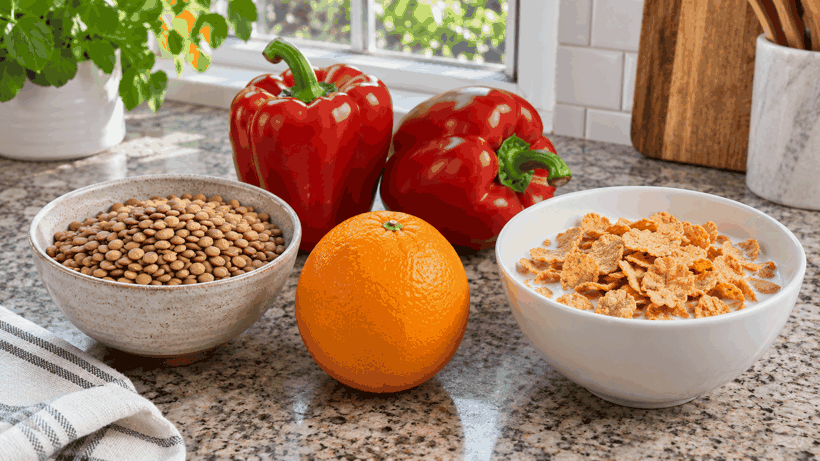
Iron-rich foods for teen girls can fit into familiar meals. Start with one dependable source at breakfast or lunch, such as fortified cereal, lentils, beans or lean meat. Then add a fruit or vegetable rich in vitamin C to meals built around plant sources. Persistent fatigue or heavy periods deserve a healthcare visit, since food intake is only one part of the picture.
Jump to frequently asked questions
Know what the daily reference means
The US recommended daily allowance for girls ages 14 to 18 is 15 milligrams of iron. For children ages 9 to 13, the reference is 8 milligrams. These values help plan usual intake for healthy people. A clinician can advise on different needs, especially if tests show a deficiency or a teen has significant blood loss.
Heme iron from meat, poultry and seafood is generally better absorbed. Beans, lentils, seeds and iron-fortified cereals provide nonheme iron. Add vitamin C at the same meal to help the body absorb more of the iron from plant foods. Lemon on dal, red pepper in a bean wrap or an orange with cereal are easy combinations.
Plan around the school day
For breakfast, choose a fortified cereal your teen likes and serve it with fruit. Compare the iron amount per serving across products and check whether the portion at home is close to the serving on the label. A cereal that lists 4 milligrams per serving contributes about 2 milligrams if your teen eats half that serving. Different brands may vary even when the front of the pack looks similar.
At lunch, try a chickpea and red pepper wrap with an orange, or a lentil and tomato salad with a familiar side. For an after-school snack, offer roasted chickpeas with fruit or a small bowl of fortified cereal. For dinner, add lemon to dal and serve it with rice and cooked vegetables. Teens who eat meat can use lean beef, poultry or seafood in meals they already enjoy.
Make the plan work with food preferences
For a teen who dislikes whole beans, blend chickpeas into a spread or try a smooth red lentil soup. If mornings are rushed, pack breakfast or lunch the night before. Look for an option the teen will actually eat during the time available. See our packed lunch ideas for study days for more combinations.
Choose two iron sources to keep on hand each week. A can of beans and a fortified cereal make useful backups. Write down the label amounts once, then focus on building a repeatable routine. For families eating vegetarian meals, rotate several sources and pair them with vitamin C foods the teen likes.
Recognize when food planning needs medical follow-up
Ask a healthcare professional about persistent fatigue, dizziness, frequent headaches or unusually heavy periods. These can have multiple causes, and a clinician can decide whether blood tests are useful. Use iron supplements under professional guidance when needed. Keep them away from younger children, because accidental overdose can be dangerous.
Read the NIH fact sheet on iron and see how vitamin C supports iron absorption.
Three school lunch combinations
For a vegetarian lunch, pack a chickpea and red pepper wrap with orange wedges. For a warm lunch, put red lentil soup in a suitable insulated flask and pack strawberries separately. For a meal with meat, try leftover lean beef and peppers in a wrap. Choose portions that suit the teen’s appetite and activity. Keep perishable food chilled with ice packs, or use suitable hot storage for soup. For a quicker weekday routine, see our balanced lunch ideas for students.
Frequently asked questions
What iron foods are easiest to pack for school?
Try a bean wrap, lentil salad or fortified cereal with fruit.
Does vitamin C have to come from oranges?
No. Bell peppers, tomatoes, strawberries and other vitamin C foods can work.
How much iron do girls ages 14 to 18 need?
The US recommended daily allowance is 15 milligrams for generally healthy girls in that age range.
Are all breakfast cereals high in iron?
No. Compare the iron amount on the label for the portion you eat.
Can vegetarian teens get iron from food?
Beans, lentils and fortified foods can contribute. Pair them with a vitamin C food and ask for personalized advice if intake is uncertain.
Do I need meat at every meal?
No. Mix suitable options across meals and use plant sources regularly if they fit your preferences.
Can I start an iron pill for fatigue?
Ask a healthcare professional first. Fatigue has several possible causes and supplement needs vary.
What if periods are very heavy?
Tell a healthcare professional so they can assess the bleeding and decide if testing is needed.
Does lemon make dal a better iron pairing?
Lemon contributes vitamin C, which can help absorption of the nonheme iron in lentils.
How can I help a teen who dislikes beans?
Try a smooth lentil soup or chickpea spread, or offer a fortified cereal they enjoy.