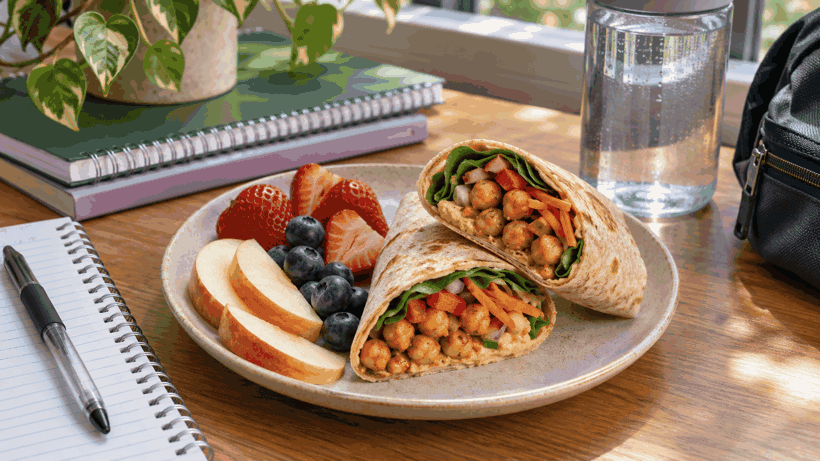
Balanced lunches for exam students are easier to plan before the study day gets busy. Start by looking at the gap between breakfast and your next reliable meal. If a lecture, exam or travel interrupts that gap, decide in advance what you can carry and when you can eat it.
Build a practical lunch
Pair a grain or starchy food with a protein option and produce. Try whole-grain toast with eggs and fruit, a chickpea wrap with vegetables, or rice and dal. A planned meal with familiar ingredients is easier to repeat than relying on whatever is open on campus. The CDC meal-planning guide includes ideas for assembling meals and snacks.
Prepare a backup for exam day
Check the exam venue rules and decide where you can eat before or afterward. If you cannot chill food, choose unopened shelf-stable options and whole fruit. If you can keep food cold, a packed yogurt or bean bowl is another option. Bring water where permitted.
Compare routines instead of blaming carbohydrates
Notice sleep, meal timing and hunger as well as what you ate. A different lunch may help you feel more comfortable, but recurring fatigue has many possible causes. If fatigue persists outside exam week or interferes with daily activities, seek professional guidance.
Read the evidence and guidance · Read the related Diet Expert guide
Put it into practice
Put a lunch break on the study schedule and pack something you can eat quickly, such as a chickpea wrap and fruit. For affordable protein options that are easy to keep on hand, see the hostel student meal guide.
Frequently asked questions
Should I skip lunch before an exam?
Plan a familiar meal around the schedule.
What can I pack without a fridge?
Whole fruit and unopened shelf-stable items.
Can I eat rice at lunch?
Yes. Pair it with a protein food and produce.
Is fruit enough for a long day?
It can be a snack, but plan a meal as well.
Can a sandwich work?
Yes. Choose a filling you enjoy.
What if the exam runs through lunch?
Plan where you can eat before or afterward.
Should I test a new food that morning?
Use a familiar option if possible.
Do energy drinks replace meals?
Plan food and fluids separately from caffeine.
What should I track?
Note sleep, meal times and when hunger returns.
When is fatigue worth discussing?
Seek help if it persists or affects daily life.