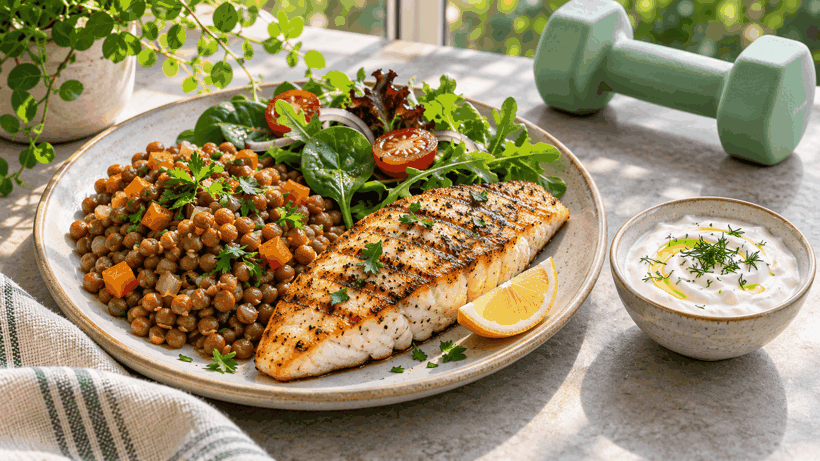
Protein-rich meals for men over 60 can support muscle function when they are paired with enough overall food and regular activity. Start by reviewing a normal day. If dinner contains a protein food and breakfast is usually tea and toast, adding something to breakfast may be the easiest first change.
Jump to frequently asked questions
Give each main meal a protein food
At breakfast, try an egg with toast and yogurt, or oats with milk and a side of yogurt. At lunch, make lentil soup thick enough to contain a meaningful portion of lentils, or add leftover chicken or beans to a grain bowl. For dinner, use fish, tofu or lean meat alongside a starch and vegetables. Pick dishes you enjoy and can buy consistently.
If you eat vegetarian meals, chickpeas, lentils, tofu and dairy if tolerated are practical choices. A small sprinkle of nuts can complement a meal, while beans or tofu can carry more of the protein. If you use a plant drink, compare protein per serving because products differ considerably.
Use a target as a conversation starter
An ESPEN expert group suggested about 1.0 to 1.2 grams of protein per kilogram per day for healthy older adults. For someone who weighs 70 kg, that works out to about 70 to 84 grams per day. The example illustrates the calculation. Your needs can differ with illness, recent surgery, kidney function, weight changes and activity level. If a clinician has set a protein limit or you have kidney disease, get personalized advice before increasing intake.
You can start with meal patterns instead of logging every gram. Look at breakfast, lunch and dinner and ask what the main protein food is in each. If you want a clearer estimate, record a typical day and use nutrition labels for the portions you actually eat. Take that record to a dietitian if your intake is difficult to assess.
Make the food and movement plan fit together
Resistance exercise can help maintain strength as you age. A beginner might start with an appropriately adapted chair rise or resistance-band routine, with guidance if balance, pain or other health concerns make exercise difficult. Eat regular meals on active and less active days. Plan an easy meal after activity if your usual schedule makes it hard to eat.
Muscle function shows up in daily tasks. Notice whether carrying groceries, standing from a chair or climbing stairs is becoming harder. If weakness is new or progressing, you are falling, or weight is dropping without trying, seek an assessment. Food and activity changes can sit alongside a check for treatable causes.
Prepare two options for difficult days
Keep beans, canned fish or tofu available for a quick lunch. Freeze individual portions of lentil soup and keep a yogurt or another suitable snack ready. If a large plate feels overwhelming, split lunch into two smaller portions and choose the more substantial food first. See our guide to small nutrient-dense meals for more ways to work with a low appetite.
Read the ESPEN recommendations on protein and exercise in older adults and see vegetarian meal ideas
for spreading protein across the day.
Frequently asked questions
What is an easy protein breakfast?
Try eggs and yogurt with toast, or oats made with milk and served with yogurt. Choose options you tolerate and enjoy.
Can I build these meals around beans?
Yes. Lentils, chickpeas and beans can be the main protein food, and tofu or dairy can add variety.
Is a shake essential?
Many people can use regular meals. A dietitian can advise about supplements when food intake is consistently low.
Do rest days count?
Yes. Aim for a regular eating pattern throughout the week.
What if meat is difficult to chew?
Try soft foods such as thick lentil soup, scrambled eggs or tofu. Ask for assessment if chewing or swallowing problems persist.
Does protein replace resistance exercise?
Protein and resistance exercise work together. Use movement suited to your ability and health.
Can I eat most of my protein at dinner?
A practical first step is to include a protein food earlier in the day, especially if breakfast or lunch is usually light.
What if I have kidney disease?
Ask the clinician who manages your kidney care about a suitable protein intake before changing it.
Are canned beans useful?
Yes. They are quick to prepare and can turn soup, salad or rice into a more substantial meal.
When should loss of strength be checked?
Ask for medical assessment if weakness progresses, falls occur, or you are losing weight without trying.