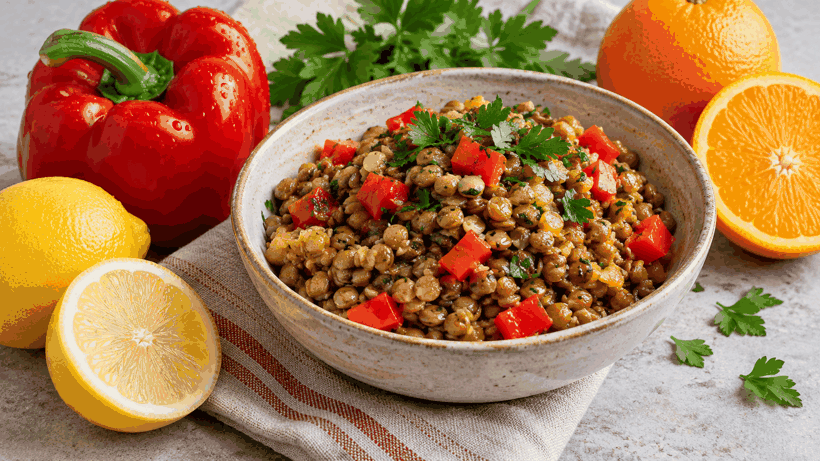
Vitamin C and iron for vegans is a meal-planning question. Plant foods supply nonheme iron, and vitamin C can
improve absorption of that form of iron. Begin with the iron food you already eat and add a source of vitamin C to the same meal.
What the evidence supports
The NIH iron fact sheet identifies beans and some fortified foods as sources of nonheme iron and describes vitamin C as an absorption enhancer. A review for the Nordic Nutrition Recommendations explains the mechanism and how other parts of a meal can influence absorption. This supports thoughtful food pairing, while long-term iron status also depends on overall intake, individual needs and losses.
Choose a pairing that fits each meal
At breakfast, try an iron-fortified cereal with strawberries or orange pieces. At lunch, add chopped red pepper and lemon to a chickpea bowl. At dinner, serve lentils with tomatoes or add a citrus fruit alongside. The vitamin C food can sit on the same plate or be eaten with the meal. Choose a combination you can repeat rather than buying ingredients for a single recipe.
Make a shopping plan with two columns
In one column, write down two iron-containing foods such as lentils and fortified cereal. In the other, choose two vitamin C foods that fit them. Check iron on the cereal label, because fortification varies. If you usually eat the same meal every day, try the pairing there first. When you switch brands or change portion sizes, revisit the iron contribution instead of assuming it is identical.
Separate prevention from treatment
Food pairings can support everyday intake. If you have persistent fatigue, a known low ferritin result, or a reason you might be losing iron, seek medical assessment. These findings can have several causes, and iron supplements should fit the diagnosis and care plan. For other plant-based nutrient checks, see our vegetarian zinc guide and vegan vitamin B12 guide.
A two-meal practice plan
Start with the meal you are least likely to skip. For example, if breakfast is usually fortified cereal, put fruit in the same place as the cereal so you remember both. If lunch is usually a bean bowl, keep bell pepper or a citrus fruit available. Try the same combination on several normal days. Review whether you actually ate the iron-containing portion and the vitamin C food together. This is a check on your routine, not a way to measure your iron level.
Frequently asked questions
What is nonheme iron?
It is the form of iron found in plant foods and many fortified foods.
Should I eat vitamin C with the iron food?
Pair them at the same meal to support absorption.
Do I need orange juice?
No. Fruit, peppers or other vitamin C foods can work.
Can I use lentils as the iron source?
Yes. Pair them with a vitamin C food you enjoy.
What can I add to chickpeas?
Try chopped bell pepper or citrus served with the meal.
Is every cereal iron-fortified?
No. Check the nutrition label.
Can I use this approach at breakfast?
Yes. Pair fortified cereal with fruit rich in vitamin C.
Does better absorption guarantee normal iron levels?
No. Intake, needs and iron losses also matter.
Do I need a vitamin C supplement?
Food pairings are a practical starting point. Ask a clinician about supplements if needed.
What if I already have diagnosed iron deficiency?
Follow your clinician’s plan and discuss the cause and treatment.