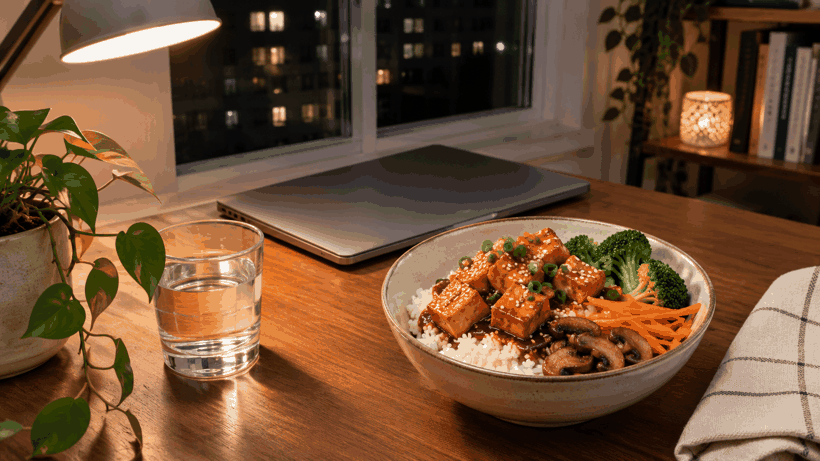
Meal timing for freelancers working at night is easier when it follows a few decisions you make before opening the laptop. Start with a main meal before your longest work block, then decide when you will pause and what you will eat if you get hungry.
A sample schedule for an 8 p.m. to 2 a.m. work block
Eat dinner at around 7 p.m. Try rice, dal and vegetables, or a tofu and vegetable wrap with fruit. Put a break on your calendar around 10:30 p.m. If you are hungry, have the snack you planned, such as yogurt and oats or toast and hummus. When you finish at 2 a.m., choose a small meal if hunger would make it hard to sleep. Treat these times as examples and move them with your actual schedule.
Make a backup for deadline nights
Keep a reheatable portion of dinner or a simple shelf-stable snack ready. Set the break for a point you can recognize, such as after delivering a file or before the last client call. Eat away from the desk when you can. On nights when dinner gets delayed, take the available break and have the meal you prepared.
What can shift-work guidance tell freelancers?
CDC/NIOSH guidance for night-shift nurses suggests keeping meals closer to daytime hours when
practical. It was written for shift workers, so adapt it to your own work and sleep times. See our night-shift meal-timing guide for an overnight example and our caffeine timing guide if coffee tends to push your bedtime later.
If your main challenge is eating enough earlier in the day, see our fiber-rich meal ideas for remote workers for lunch and snack options.
Build a schedule that survives a deadline
Set two reminders: one before your main work block and one at a realistic stopping point. Write down a meal and a fallback that you can prepare in under five minutes. For example, eat dal and rice before work and keep toast, hummus and fruit ready for an evening break. If your client call runs long, move the break to the first available slot instead of skipping the plan entirely.
On nights when work ends much earlier, keep the same pre-work meal if it still suits you and drop the planned snack if you are comfortable. Track hunger and sleep for several work nights before deciding what to change. A flexible routine is easier to repeat than a timetable tied to the minute.
Frequently asked questions
What if my first client call starts at dinner time?
Eat beforehand when possible or split dinner into two portions around the call.
Can I meal prep with only a microwave?
Use a microwaveable grain, beans and frozen vegetables. Follow the package directions.
What is a backup for nights I cannot cook?
Keep whole-grain crackers, roasted chickpeas and whole fruit available.
How do I choose a break when deadlines move?
Tie it to an event such as sending a draft, rather than a fixed clock time.
Should I eat again when I finish work?
If you are hungry and plan to sleep soon, try a small, familiar option.
How can I separate snacking from working?
Put a planned portion on a plate and step away from your screen if you can.
What if I sleep at a different time each night?
Work backward from your expected sleep time and adjust your last meal and caffeine timing.
Can I use leftovers for my main meal?
Yes. Refrigerate leftovers promptly and follow safe storage and reheating guidance.
What should I track when testing a routine?
Record your main meal, break, hunger and intended sleep time for a few work nights.
How can I recover after missing the planned break?
Use the next available pause and choose the meal or backup you prepared.