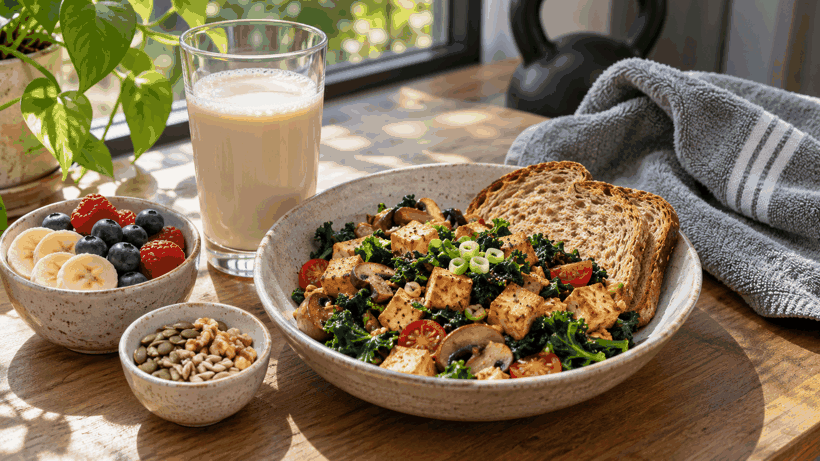
Calcium-rich foods for dairy-free athletes include some fortified plant drinks and tofu made with calcium salts. The most useful starting point is to check the foods you already buy, because products that look similar may provide very different amounts.
Read the label before changing brands
Check calcium per serving and compare that serving with the amount you use. For tofu, check both the nutrition label and ingredient list. The NIH Office of Dietary Supplements calcium guide explains why tofu made with a calcium salt can contribute more than some other types.
Put two options into your usual meals
Try oats made with a fortified soy drink at breakfast and a rice bowl with calcium-set tofu at dinner. If you eat fish, canned sardines with bones are another option. Keep one option in your regular shopping list so it does not depend on what you happen to find after training.
Review the whole pattern
Look at several typical days and note how often the foods appear. If you have a restrictive diet, a history of
bone stress injury or are unsure whether you get enough calcium, discuss the pattern with a qualified clinician or sports dietitian. See our vegetarian recovery meals for runners for meal combinations and our guide to vegan B12 sources for a separate fortified-food label check.
Compare foods on the serving you actually eat
Write down the amount of plant drink you normally pour, the calcium listed per serving and how often you use it. Compare two products using the same amount rather than comparing differently sized label servings. Repeat this with tofu. If a brand changes its recipe, check the new packaging before counting on it as your usual calcium source.
Build a rotation across breakfast, lunch and dinner. For instance, use fortified soy drink in oats and calcium-set tofu in a rice bowl, then keep a second fortified option for weeks when your regular product is unavailable. The goal is a dependable food pattern you can describe to a qualified sports dietitian if you need individual advice.
If you avoid lactose but still eat dairy, our vegetarian calcium guide for lactose intolerance compares lactose-free dairy with plant-based options.
Frequently asked questions
Is every plant drink a reliable source of calcium?
Check the nutrition label. Some plant drinks are fortified, while others provide much less calcium. Compare the amount per serving and account for the portion you actually drink.
Does every type of tofu contain the same amount of calcium?
No. Tofu made with calcium salts can provide more calcium than other types. Check the ingredients for a calcium salt and use the nutrition label to compare actual amounts.
How do I compare labels that use different serving sizes?
Convert both to the amount you actually eat or drink before comparing calcium.
Can I count a fortified drink used in oats?
Yes. Count the amount you used, based on the calcium on its label.
What should I check when buying tofu?
Check the nutrition label for calcium and the ingredients for a calcium salt.
Do plant drinks all provide similar amounts of protein?
No. Check protein separately, particularly if the drink replaces milk in a recovery meal.
What if my usual fortified brand disappears?
Check the replacement’s label rather than assuming the same calcium amount.
Are sardines an option if I avoid dairy but eat fish?
Canned sardines with edible bones are one food option listed by NIH.
How can I plan for travel?
Check what will be available at your destination and keep a familiar shelf-stable option when appropriate.
Does a calcium label tell me about vitamin B12?
No. Check B12 separately if it matters for your diet.