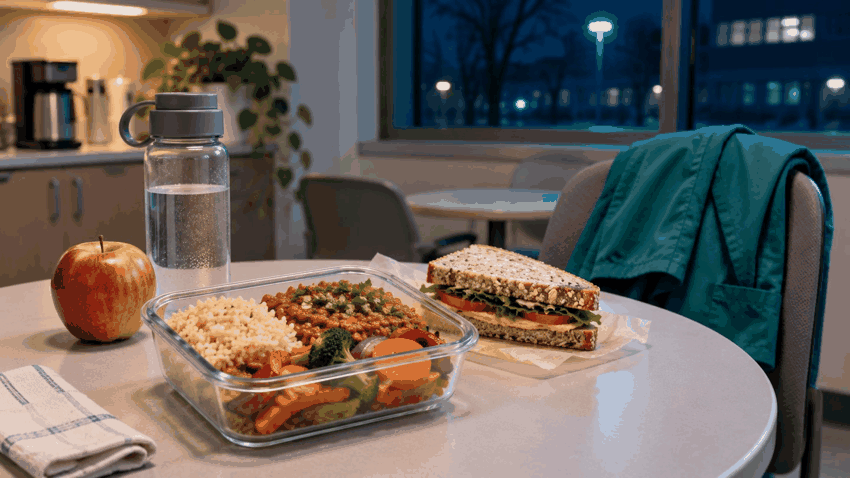
A shift that starts at 7 p.m. rarely comes with a guaranteed dinner break. A practical starting point is to eat a substantial meal before handover, bring something small for an unpredictable break, and decide what you’ll eat after work based on hunger and how soon you plan to sleep.
Build your shift around two reliable points
Before work. Give yourself enough time for a meal you can actually finish. Try dal, rice and vegetables with plain yogurt, or a whole-grain wrap with chicken or tofu and salad. Pick portions that leave you comfortable when the shift starts.
During work. If you can eat earlier in the shift, use that opportunity. Pack a portable option for a later break, such as fruit and nuts, yogurt and oats, or half a whole-grain sandwich. If you’re hungry overnight, a planned snack gives you something to reach for even when the cafeteria is closed.
After work. If you’re hungry and about to sleep, consider a small meal such as oatmeal with milk or toast and an egg. NIOSH advises night-shift nurses to avoid large meals close to their main sleep period. NIOSH guidance on meals and sleep.
A sample plan for a 7 p.m.–7 a.m. shift
5:30 p.m. Eat your main meal before leaving. 10:30 p.m. Use your first available break for a packed sandwich or leftovers if you’re hungry. After midnight. Keep a small backup snack available if you need it. After handover. Have a small breakfast if hunger is likely to interrupt sleep. Treat the times as examples and adjust them to your actual break schedule.
What the evidence says about eating overnight
NIOSH suggests keeping eating as close to a daytime pattern as your schedule allows and reducing intake between midnight and 6 a.m. when feasible. In a laboratory study of 19 people doing simulated night work, participants who ate only during daytime avoided the short-term decline in glucose tolerance seen in the group that also ate at night. The study measured short-term responses under controlled conditions, so it leaves open how a strict daytime-only schedule would work across real hospital shifts. NIOSH guidance for night-shift nurses · Controlled study in Science Advances.
Make a backup plan for missed breaks
Pack a meal and a separate snack so you can use whichever fits the time you get. On rotating schedules, start by anchoring the meal before work. Try that change for a few shifts and note when hunger becomes distracting or interrupts sleep. If you use insulin or another medicine that can cause low blood sugar, work with your diabetes care team before changing when you eat.
Pack around the break you’re most likely to get
Keep a main meal and a smaller backup in separate containers. If only one break is available, use the option that fits the time you have. See vegetarian meal prep for call center shifts for a split-break example. If coffee tends to run late into your shift, our guide to caffeine timing and sleep explains how to work backward from your planned sleep time.
Explore more Diet Expert articles or suggest a topic.
Working from home instead of on a ward? See our meal-timing plan for freelancers who work at night for a schedule you can adapt around client calls and deadlines.
Adapt the example to changing hospital breaks
Pick a main meal you can eat before handover, then pack a smaller portion you can finish during a short break. For a night when the first break moves, choose a food you can store safely until you have time. Keep a second option available rather than relying on an open cafeteria or a single meal window.
At the end of the shift, decide whether hunger is likely to interrupt sleep and choose a small option if appropriate. Compare a few shifts rather than judging the plan on an unusually busy night. If you use medication that can cause low blood sugar, ask your care team how to adjust meal timing safely.
Frequently asked questions
How should I pack for a shift when my meal break might be interrupted?
Pack two separate containers so you can eat a smaller portion during a brief break and save the main meal for later. Store perishables safely and keep the backup easy to reach.
What if my shift starts at a different time from the sample plan?
Anchor the main meal to the time before your own handover, then plan a backup for the first break you can realistically take. Use hunger and your planned sleep time to decide whether to eat again after work.
What can I eat before handover?
Try a familiar balanced meal such as dal, rice and vegetables.
What if I have only a very short break?
Pack a small option separately so you can eat it without opening the entire meal.
Can I use a fridge at work?
If one is available, refrigerate perishables on arrival. Otherwise plan safe cold storage.
Should I copy the sample timetable exactly?
Adjust it to your handover time, breaks, hunger and intended sleep.
How should I plan for a closed cafeteria?
Pack a meal and keep a separate shelf-stable backup.
Can I drink coffee near the end of the shift?
Consider your planned sleep time and try moving the last caffeinated drink earlier if sleep is difficult.
What can I eat after a shift if I am hungry?
Consider a small familiar meal, such as oatmeal with milk or a suitable alternative.
What should I track across shifts?
Note break timing, hunger and whether hunger interrupted sleep.