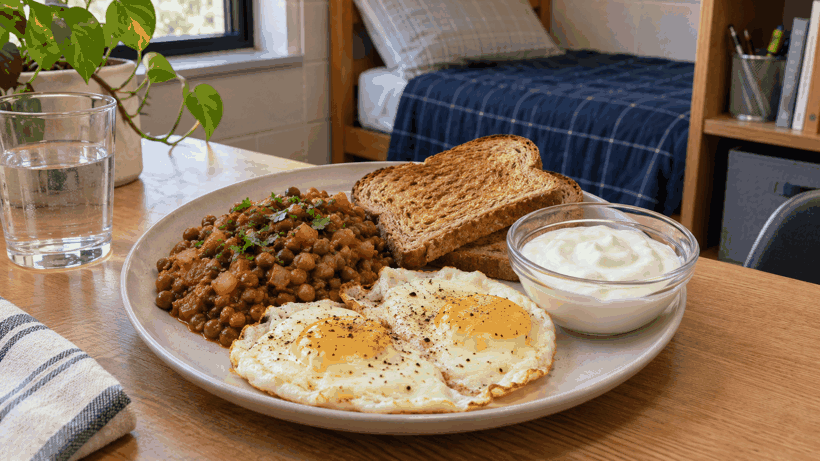
Budget protein meals for hostel students depend on equipment and storage as much as price. Pick two protein foods you can buy regularly and match them with meals you already eat.
Start with what your room or dining hall allows
If you can cook, try dal with rice or eggs with toast and fruit. With a shared fridge, keep a small supply of plain yogurt or cooked beans. If you have no fridge, choose unopened shelf-stable foods such as roasted chickpeas or single-serve bean pouches that you can finish once opened.
Compare what you actually use
A large pack can look cheaper until half of it spoils. Compare the cost per portion you’ll eat and choose foods that work in more than one meal. Lentils can stretch across a curry, a soup and a filling for flatbread.
Create a two-meal rotation
Pick a low-effort breakfast and one dinner you can make on your busiest day. Use the dining hall for variety where available. Revisit your choices when prices or access change.
CDC guidance on planning meals and snacks · Explore more Diet Expert articles
Build a small shopping list around two proteins
Try lentils for dinner and plain yogurt or roasted chickpeas for a grab-and-go meal. Write down two meals you’ll make before buying larger packs. The American Heart Association pantry guide has more shelf-stable ideas. See our high-protein breakfast guide for college students for the morning rotation and vegetarian zinc food guide for ways to vary a bean-and-grain menu.
Compare cost by meals you can actually make
Choose one meal that needs a shared kitchen and one that can be assembled with no cooking. A low-cost example is dal and rice on a kitchen day, then whole-grain crackers, a shelf-stable bean pouch and fruit when the stove is busy. Add the prices of the ingredients you will actually use rather than comparing the largest packs on the shelf.
Make a small list for the week and keep storage in mind. If fridge space is limited, buy a single portion of yogurt rather than a large tub. If you can cook and store food safely, use lentils in two meals, such as a rice bowl and a flatbread filling. A plan that works with your hostel rules is easier to repeat.
Frequently asked questions
What can I buy if I only have a kettle and no fridge?
Try roasted chickpeas, peanut butter if suitable, or unopened single-serve shelf-stable soy drinks. Use the kettle for plain oats if your hostel permits it, and finish opened products according to their storage instructions.
How can I compare two foods when the pack sizes differ?
Estimate how many portions you will actually eat before each product spoils. Divide the price by that number. A smaller pack can be the better buy if you will finish it.
Which ingredients can cover two different dinners?
Lentils can go into a rice bowl or a wrap with vegetables.
What if my hostel does not allow cooking?
Use the dining hall and keep shelf-stable options such as roasted chickpeas or nut butter if suitable.
Can I compare protein using pack price alone?
Compare protein and cost per portion you are likely to finish.
What should I look for in a dining-hall meal?
Choose a protein option such as beans, eggs or yogurt, then add a grain and produce.
What can I keep for an emergency meal?
Store unopened shelf-stable foods according to their labels.
What can I eat when I miss breakfast?
Carry a whole-grain sandwich and fruit, or buy a familiar breakfast at the dining hall.
Is a smaller yogurt pack sometimes better value?
Yes, if you will finish it and would waste part of a larger pack.
How can I make oats more substantial?
Add plain yogurt, milk or a fortified soy drink if it suits you.