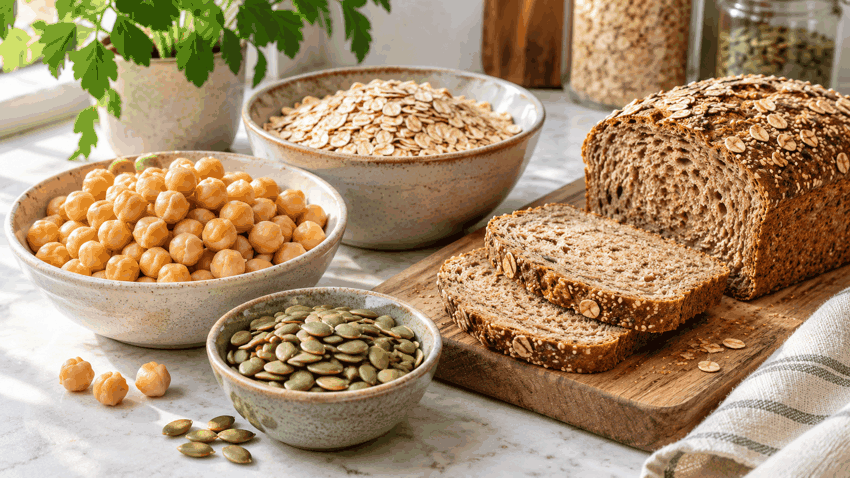
A vegetarian diet can supply zinc, but a menu built around refined grains and a small serving of vegetables may leave few reliable sources. Start by giving a zinc-containing food a clear place in meals you already eat.
Build a day around foods you already buy
Try oatmeal with pumpkin seeds at breakfast, a chickpea and whole-grain bowl at lunch, and lentils with whole-grain flatbread at dinner. If you eat dairy, plain yogurt or cheese can contribute. A fortified cereal is another option. Compare labels because the amount varies by product.
How absorption changes the picture
Beans and grains contain phytates, which can reduce zinc absorption. The NIH Office of Dietary Supplements notes that soaking beans, grains or seeds before cooking and choosing fermented foods may improve availability. Keep beans and whole grains in the rotation and use several zinc sources instead of relying on one food.
Make one change this week
Add roasted chickpeas or pumpkin seeds to your usual grocery list. Put them somewhere you’ll see them when packing lunch. If a clinician has identified a deficiency, ask about the cause and treatment before buying high-dose supplements. Too much zinc over time can interfere with copper absorption.
A simple zinc shopping checklist
Start with one legume, one seed or nut you tolerate, and one grain you already use. Check fortified products against the NIH consumer guide to zinc rather than assuming brands provide the same amount. For two different approaches to plant-based meals, see reliable vegan B12 sources and budget protein meals for hostel students.
NIH zinc guidance for health professionals · Browse Diet Expert guides
Build a repeatable vegetarian zinc rotation
Pick two meals you eat often and identify their zinc-containing ingredients. For example, use pumpkin seeds with oats and chickpeas with whole-grain pita. If you eat dairy, plain yogurt can be another option. Look at several days instead of deciding based on one meal or one food.
Compare fortified products using the portion you actually eat. If you prefer to use beans and grains, vary the sources and choose preparations you enjoy, such as cooked lentils, fermented bread or roasted chickpeas. A registered dietitian can help assess your intake if you follow a restrictive pattern or have concerns.
If you are planning another plant-based nutrient, our guide to pairing vitamin C with plant iron explains which foods to combine at a meal.
Frequently asked questions
Can I build a zinc-rich vegetarian meal without dairy?
Yes. Try a chickpea and whole-grain bowl with pumpkin seeds, or lentils with whole-grain flatbread. Use a variety of zinc-containing foods and check labels if you rely on fortified products.
Do I need a zinc supplement if I eat beans most days?
Eating beans regularly is one part of the picture. Supplement needs depend on your overall intake and health. Ask a clinician if you suspect a deficiency or want to take a high-dose supplement.
Which seeds can I add to breakfast?
Pumpkin seeds are one option to add to oats or yogurt.
Can I get zinc from fortified cereal?
Some products are fortified. Check the nutrition label for zinc per serving.
What can I make with chickpeas and whole grains?
Try a chickpea and vegetable wrap in whole-grain flatbread.
Does the label account for absorption?
It lists the amount present. Absorption varies with the food and overall meal.
What are phytates?
They are compounds in foods such as grains and legumes that can reduce zinc absorption.
Can I still eat beans if they contain phytates?
Yes. Beans can contribute zinc and other nutrients. Include varied sources.
How can I compare two fortified products?
Use the amount in the portion you actually eat, not the package size.
Does vegetarian necessarily mean dairy-free?
No. If dairy suits your diet, some dairy foods can contribute zinc.