Low-sodium meal prep for office commuters starts with the meal you buy or pack most often. Identify
which ingredients contribute sodium, then replace the ones you can change without adding much time. Packaged foods can still be useful when you compare products and portions.
Compare what goes into the actual lunch
The CDC Nutrition Facts label guide explains why serving size matters. If a sauce has 180 mg sodium per tablespoon and you use two tablespoons, that is 360 mg from the sauce. Add the sodium in bread, fillings, cheese or other components as needed. Compare two versions using the amounts you actually pack.
Prep two lunches from one set of ingredients
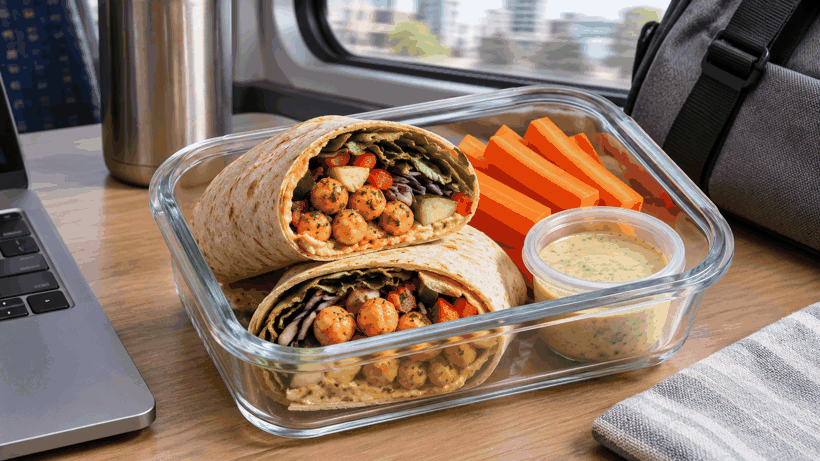
Make a chickpea wrap with shredded carrots and a separate dressing. Use the remaining chickpeas and vegetables in a rice bowl the next day. Compare canned beans, wraps and sauces rather than assuming one ingredient is always the main source. Use lemon or herbs if you want flavour without relying on a prepared sauce.
Set up a fallback for commuting delays
Keep a separate shelf-stable option such as whole fruit, crackers and an unopened bean pouch. Check labels for sodium and storage directions. For perishable lunches, use a refrigerator at work or follow USDA guidance for keeping packed food cold. If a meeting or train delay disrupts your schedule, the fallback gives you an option without relying on a last-minute purchase.
Pick one repeatable change
Use the CDC sodium reduction guide to identify frequent sources. Try a different wrap, a smaller portion of dressing or a different filling for the next few lunches. See our restaurant sodium guide for bought lunches and our desk lunch guide for more meal combinations. If you have a prescribed sodium target, use the plan from your clinician.
Frequently asked questions
Can I still use packaged ingredients?
Yes. Compare their sodium per portion and pick options that fit your meal.
What is the first label detail to check?
Check the serving size before comparing sodium.
Should I count dressing separately?
Yes, if you add it separately. Use the amount you actually eat.
Do plain-looking wraps always have less sodium?
No. Compare labels.
What can I prepare for two days?
Use one bean and vegetable base for a wrap and a grain bowl.
What if I do not have a fridge at work?
Use safe cold storage or bring food designed for room-temperature storage.
How can I add flavor without a packaged sauce?
Try lemon, herbs or a spice blend you enjoy.
What can I leave in a desk drawer?
Unopened shelf-stable items stored as the label directs.
How can I compare home-packed and bought lunches?
Compare the full order and the portions you eat, including sides.
Should I use a general sodium target if my clinician gave me one?
Follow your clinician’s individual guidance.