Lower-sodium restaurant meals are easier to find when you compare your actual order instead of relying on a menu
description. Sodium can come from sauces, cheese, bread, broth, cured meats and prepared ingredients. The CDC guide to reducing sodium recommends checking nutrition information and asking for sauces or dressings separately.
Compare the full order
Look for sodium per serving and check whether the listed serving is the full plate. For example, two servings at 450 mg each total 900 mg before the sides. Add bread, dressing, soup or extras if the menu lists them separately. This is arithmetic to help you compare orders. Your own target may differ if your clinician has provided one.
Decide what you can change before ordering
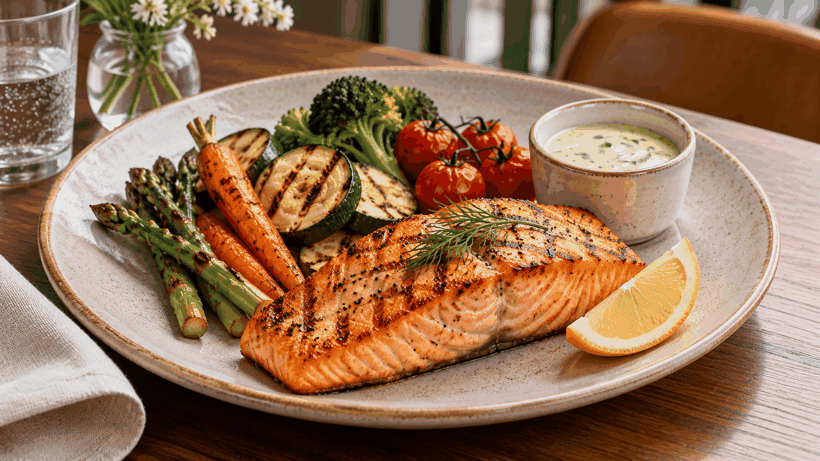
Choose an entrée you like and ask which parts can be prepared separately. A request such as “Could I have the sauce on the side and plain vegetables instead of the seasoned side?” is easier to act on than a general request to make everything low-sodium. Some ingredients are prepared ahead, so staff may be able to remove a topping but unable to change the sodium in a marinade.
Build a rotation for your regular restaurants
At a sandwich shop, compare fillings and consider leaving off a salty topping. At a bowl counter, compare sauces and choose one you can add yourself. At a sit-down restaurant, ask whether a plain side is available. Save one or two repeatable orders in your notes. If information is unavailable, record the choices you made instead of assigning an exact sodium estimate.
Review patterns, not one meal in isolation
If you eat out frequently, compare a normal week and start with the orders you repeat most. CDC notes that packaged and restaurant foods contribute much of the sodium people eat. If you have a medical reason to follow a specific limit, confirm how to handle meals without reliable menu data with your clinician or dietitian. See our DASH guide for a broader eating pattern and our airport meals guide for travel days.
If you buy lunch because there is no time to cook before work, try comparing one purchased lunch with one packed lunch using the same serving-size approach. Our lower-sodium commuter meal-prep guide shows how to count the wrap, filling and dressing separately.
Frequently asked questions
Does grilled always mean low sodium?
No. Marinades and seasonings can add sodium.
What is the first number to check?
Find sodium per serving and confirm how many servings are in your order.
What if the menu lists two servings?
Double the listed sodium if you eat both.
Can I ask for sauce on the side?
Yes. Use the amount you want instead of getting it pre-mixed.
Can staff remove sodium from a prepared broth?
Usually the recipe is already set. Ask about another dish.
How can I compare sandwiches?
Include bread, fillings, cheese, spreads and sides.
Is an exact estimate possible without nutrition data?
Usually not. Use available comparisons and practical requests.
Can I choose plain sides?
Ask whether plain vegetables or another unseasoned side is available.
What should I track if I dine out often?
Note the repeat orders you can compare and modify reliably.
Do I need a personal sodium target?
Ask your clinician if you have a condition or treatment plan that affects your target.