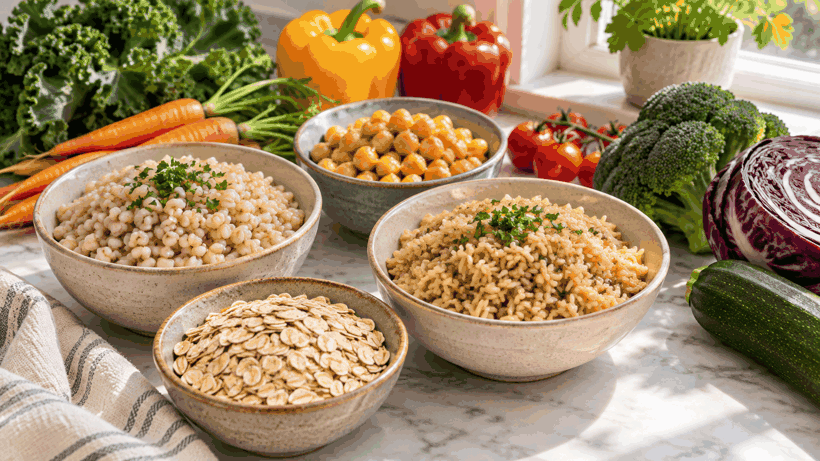
Whole grains for prediabetes are easiest to introduce by swapping part of a food you already eat. Try oats in place of a low-fiber cereal or mix brown rice into a familiar rice dish. Keep vegetables and a protein food alongside the grain so the change fits a complete meal.
Jump to frequently asked questions
Read two parts of the label
Start with the ingredient list. Look for a named whole grain such as whole wheat, whole oats or brown rice. A dark loaf or a package labeled multigrain can still contain mainly refined flour. Compare similar products by checking which grain appears first and how much fiber is listed for the serving you actually eat.
For example, one bread may list 2 grams of fiber per slice and another 3 grams. If you normally eat two slices, the difference is 2 grams at that meal. Serving sizes can differ between brands, so compare equivalent amounts when you shop.
Pick a swap you can repeat
At breakfast, cook plain oats and serve them with yogurt and berries if those foods suit you. For lunch, add cooked barley to a vegetable soup with beans or chicken. At dinner, mix some brown rice into your usual rice and serve it with cooked greens and dal, fish or tofu. Brown rice takes longer to cook than white rice, so cook each separately at first and mix after cooking.
If the household prefers roti, try whole-wheat atta and keep the rest of the meal familiar. For a gluten-free option, choose brown rice, quinoa or certified gluten-free oats as appropriate. Barley and wheat contain gluten.
Increase fiber gradually
Try one swap for several days before making another. A sudden increase in fiber can cause gas or discomfort. Drink water regularly according to your needs and any instructions from your care team. Fiber also comes from beans, vegetables, whole fruit and nuts, so rotate foods you enjoy rather than relying on one cereal or grain.
Keep portions and follow-up in view
Whole grains still provide carbohydrate. Use a serving that fits your usual meal plan and consider how much grain, fruit or other carbohydrate is already on the plate. The CDC plate method offers a visual way to plan portions. For more sample meals, see our Mediterranean lunch ideas. Ask your clinician when to repeat testing and what nutrition goals make sense for you.
Read the CDC Diabetes Prevention Program fiber guidance and see Mediterranean diet guide for
Frequently asked questions
Are all brown breads whole grain?
No. Check for a named whole grain near the start of the ingredient list.
Is multigrain the same as whole grain?
Multigrain describes the number of grains used. Check whether those grains are whole.
Can I still have white rice?
Yes. Start with a meal that suits your plan and try replacing part of the rice if you enjoy the change.
Are plain rolled oats a whole grain?
Yes. Compare flavored products for added sugar and portion size.
Should I increase fiber all at once?
Start with one swap and give your body time to adjust before adding more.
Are whole grains carbohydrate foods?
Yes. Portion size still matters in a meal plan.
Is barley gluten free?
No. Choose an appropriate alternative such as brown rice or quinoa if you avoid gluten.
Can beans help me get more fiber?
Yes. Beans contribute fiber, protein and carbohydrate and can complement a whole-grain meal.
What if I feel bloated after a change?
Try a smaller change and increase gradually. Seek advice if symptoms persist.
Will switching grains replace my next blood sugar test?
Keep your planned follow-up so your clinician can assess your progress.