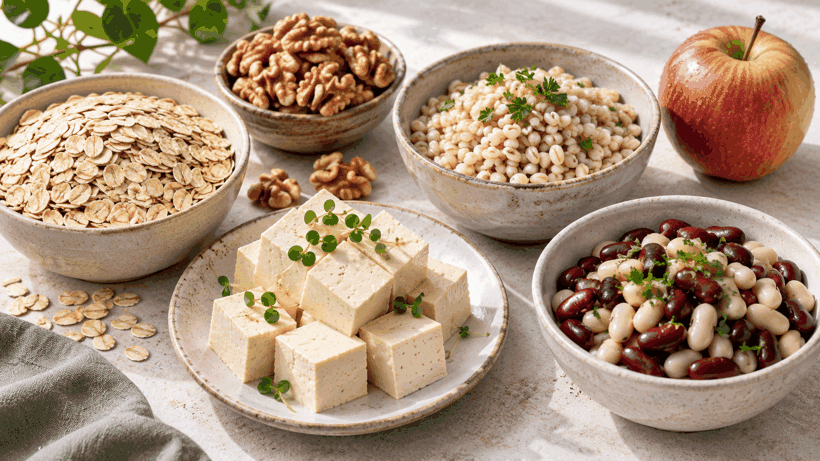
The Portfolio diet for vegetarians combines plant protein, viscous fiber, nuts and plant sterols. A simple place to start is to swap a familiar breakfast for oats and nuts, then make beans or tofu the main protein at lunch. Use the plan as part of your cholesterol care and keep taking prescribed medication as directed.
Jump to frequently asked questions
Understand the four parts of the Portfolio diet
Viscous fiber forms a gel when mixed with water. Oats and barley are common ways to get it. Use oats in porridge, or mix cooked barley into soup or a grain bowl. Increase fiber gradually if a sudden change gives you bloating. If you are considering a fiber supplement, ask a pharmacist about timing around medicines.
Soy protein featured in the original dietary trial. Try tofu, tempeh, edamame or unsweetened soy beverage. Beans, lentils and peas can also replace cheese or other higher-saturated-fat ingredients in everyday meals. The protein choice works best when it replaces something on the plate, so start by changing one dish you already cook.
Choose unsalted nuts that suit your budget and allergies. Add chopped walnuts to oats or try a small portion of almonds with fruit. For the sterol component, check whether a product specifically lists added plant sterols and how much a serving contains. A standard oil spread and a sterol-enriched spread can look similar on the shelf. Ask a clinician or dietitian whether a fortified product fits your situation.
Try a repeatable vegetarian day
For breakfast, make oats with unsweetened soy beverage and walnuts. Lunch could be a barley and chickpea bowl with chopped vegetables and lemon. For dinner, try tofu and vegetables with brown rice or a bean chili with a small barley side. A snack could be an apple and unsalted nuts. If you use a sterol-fortified product, use it as directed on the label and discuss your use with your care team.
On a busy week, cook one batch of barley and one tray of tofu. Use the barley in soup or salad and the tofu in wraps or rice bowls. Keep canned beans and plain oats on hand so the meals are still possible when you run out of prepared food.
What the research can tell you
A six-month randomized trial found greater LDL reductions in groups given advice on the dietary portfolio than in the low-saturated-fat comparison group. A systematic review of controlled trials also found lower LDL with the combined pattern. These findings concern the overall diet. Individual results vary, so agree on when to repeat a lipid panel with the clinician who manages your cholesterol.
Make the first week manageable
Pick a breakfast and dinner change you can repeat. Use oats for breakfast on several days and swap some cheese-heavy dinners for lentil, bean or tofu meals. Once that feels routine, experiment with barley or a nut you enjoy. If you have an allergy, kidney disease or another condition that affects your diet, ask a dietitian to adapt the plan to you.
Compare ingredients in the foods you already buy
Compare two plain breakfast cereals by looking for oats or barley near the top of the ingredients list. When buying a meat substitute, compare saturated fat and sodium across similar products. Some coconut-oil-based foods can be high in saturated fat, even if the package describes them as plant-based. If you usually cook with ghee or butter, try using olive or canola oil in a dish where the flavor works for you.
For a work lunch, pair a container of cooked barley with chickpeas and a handful of vegetables, then add an oil-and-lemon dressing before eating. If you can only find rice, keep the rice and use oats at breakfast instead. Our guide to Mediterranean lunches for work has other combinations you can adapt.
Read the randomized trial of the Portfolio diet and see plant-forward meals for high cholesterol.
Frequently asked questions
Is a vegetarian diet already a Portfolio diet?
A vegetarian diet can take many forms. The Portfolio pattern deliberately combines viscous fiber, plant protein, nuts and plant sterols.
Are steel-cut oats essential?
Plain rolled oats are a practical option. Choose a form you will eat regularly and check flavored products for added sugar.
Can I use beans if I dislike tofu?
Yes, beans are useful for plant protein in daily meals. The original Portfolio trial emphasized soy protein as one component.
What if I have a nut allergy?
Avoid the nuts that trigger your allergy and check for cross-contact. A dietitian can help adapt the pattern around the foods you tolerate.
Can I still eat yogurt?
If you include dairy, choose options that fit your saturated fat goals and keep plant proteins as regular meal choices.
Do I have to buy fortified products on day one?
Start with the foods you can use consistently. Discuss the plant sterol component and label directions when choosing a product.
Is coconut oil a good replacement for butter?
Coconut oil is high in saturated fat. Olive or canola oil is a practical swap for many cooking tasks.
When should I recheck my LDL?
Ask your clinician for a date based on your starting level, health history and any changes to treatment.
Can I stop my statin when I start this diet?
Continue prescribed medicine unless the clinician managing your cholesterol changes it.
How can I make the diet cheaper?
Use plain oats, dried lentils or canned beans and shop for unsalted nuts in modest quantities.