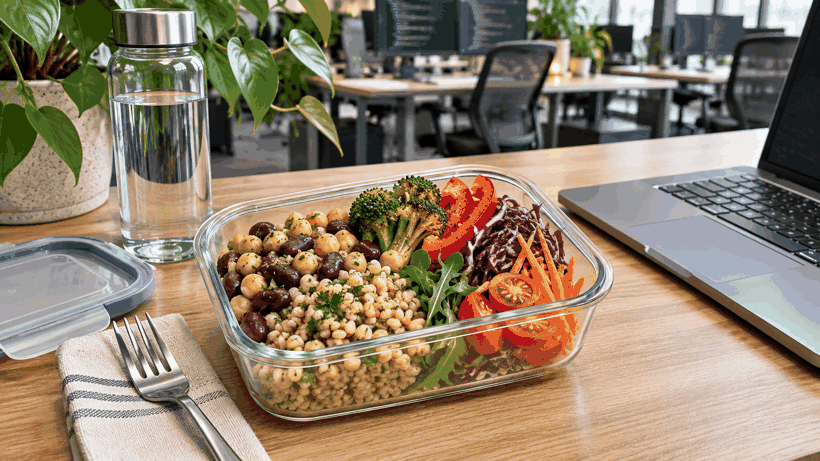
High-fiber lunches for software developers can be easy to repeat without eating the same thing every day. Start with a legume or whole grain and pick vegetables that work with the texture and flavor you like.
Build a lunch you can eat between meetings
Start with cooked barley or brown rice, add white beans or chickpeas, then add roasted carrots, peppers or frozen peas. Keep dressing separate until lunch. If you work away from home, chill the meal and keep it cold until you eat.
Make one desk-friendly backup
Keep plain oatmeal, whole-grain crackers or roasted chickpeas in a drawer. Combine your backup with fruit or a lunch you can buy nearby. A backup works best when it is easy to replace and you genuinely enjoy it.
Change one ingredient at a time
If your current lunches are low in fiber, swap in one ingredient rather than changing the entire bowl. Add more fiber gradually and drink water during the day. Notice which foods you tolerate and which are easy to prepare again.
NIDDK guidance on fiber and fluids · Explore more Diet Expert articles
A three-lunch rotation for the workweek
Rotate white beans and barley, lentils and brown rice, and chickpeas with whole-grain pita. Use a different vegetable or dressing each day. For the days you work from home, see fiber-rich meals for remote workers. For carrying a lunch safely away from a refrigerator, see the delivery-driver packed-lunch guide.
Use a base-and-topping system for desk lunches
Choose a grain for two days, such as barley or brown rice, and prepare two toppings. White beans and roasted peppers make one bowl, while chickpeas and carrots make another. If you need to travel to the office, keep cooked ingredients chilled and take dressing separately. If fridge access is uncertain, keep an unopened shelf-stable backup.
Add fiber at a pace you tolerate. Try one swap, such as whole-grain bread in a familiar sandwich, and see whether it works for you. Take a real lunch break when possible, then review which lunches you can assemble and finish without interrupting the rest of the workday.
If you want to change several parts of lunch, try one substitution at a time. Start with your usual sandwich and switch the bread, then decide on a separate day whether to add beans or vegetables. If constipation is the reason for the change, see our desk-worker guide to gradual fiber changes. If sodium is your priority, use the serving-size comparison in our commuter meal-prep guide.
Frequently asked questions
What is an easy first fiber swap at lunch?
Try whole-grain bread or add a small portion of beans to a familiar meal.
Can I make lunches without a microwave?
Yes. Pack a safely chilled grain salad or wrap that you can eat cold.
What if I only have a desk drawer?
Store unopened shelf-stable options such as crackers or roasted chickpeas.
How can I make two lunches from the same grain?
Use different beans, vegetables or dressings for each bowl.
Do I need to eat a very high-fiber meal at once?
Start with a manageable change and increase fiber gradually.
How can I keep vegetables from becoming soft?
Pack crunchy vegetables or dressing separately and mix at lunch.
What should I do during a meeting-heavy day?
Block a break and bring a meal you can open quickly.
Can I use canned beans for lunch?
Yes. Follow label directions and refrigerate any leftovers promptly.
What should I track if changing lunch affects digestion?
Note the ingredients, portion and when symptoms occur. Seek advice if symptoms persist.
How can I keep a lunch routine through office and remote days?
Use the same grain and bean base, then adjust packing and storage.