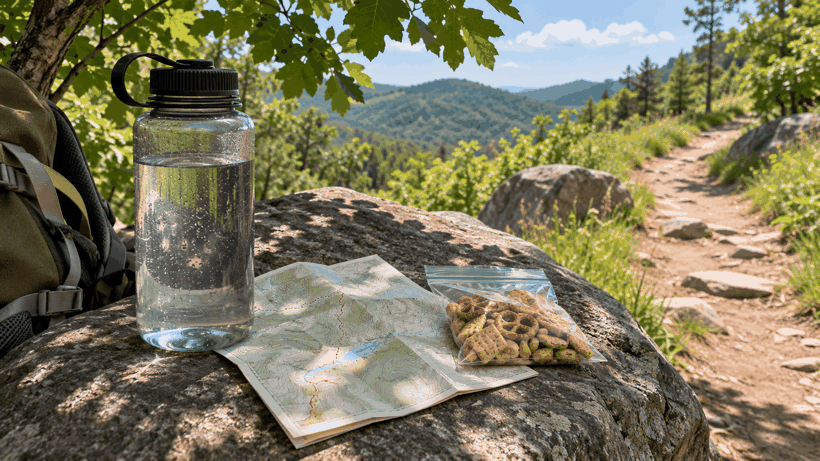
Hydration for summer hikes starts at home. Check the route, weather and reliable water sources before deciding what to carry. A short, shaded walk and a steep climb in direct sun make very different demands. Choose an early start, a shorter route or another day if the forecast exceeds what your group can handle.
Jump to frequently asked questions
Make a route and refill plan
Find out whether taps are working and whether natural water sources require treatment. Confirm current conditions with the park or trail manager. Carry enough water to reach the next confirmed source and allow a margin for slower travel. A stream shown on an old map may be dry, and the return uphill can take much longer than the descent.
Before setting off, agree on a turnaround time and an earlier checkpoint. At that checkpoint, compare remaining water with the distance and climb still ahead. Turn back while the group has enough for the return. If one person is struggling to keep pace, shorten the route for the group.
Pack snacks you can eat in the heat
Start after a familiar meal. Oats and yogurt, eggs and toast, or a banana with peanut butter toast are easy examples. On the trail, choose portable foods such as pretzels, crackers, dried fruit or a sandwich that can be stored safely. Pack snacks where you can reach them without unpacking your whole bag.
Sip as needed and take shade breaks. On a longer outing with prolonged sweating, a salty snack or balanced electrolyte drink can help replace some of what is lost. Follow drink mixing instructions and avoid forcing large volumes of plain water. If a clinician has set fluid or sodium limits for you, ask how to adapt hot-weather activity to those limits.
Check in before the hottest stretch
Notice whether the group has slowed, whether shade is available and whether the next refill point is still realistic. A short stop is a good time to drink, eat a little and decide whether to continue. On exposed routes, make this decision before leaving shade. Keeping a reserve also helps if the return takes longer than planned.
Know when cooling and help come first
Headache, dizziness, nausea or unusual weakness in heat are reasons to stop hiking, get to a cooler place and reassess. Confusion, collapse or seizures can indicate heat stroke. Call emergency services, begin cooling immediately and stay with the person. Follow local rescue guidance. The CDC heat illness guide explains warning signs and first aid. For a different heat setting, see our guide to fueling endurance training.
Read the National Park Service summer hiking guidance and see hydration planning for outdoor workers.
Frequently asked questions
How much water should I carry?
Plan for the distance, heat and terrain between reliable sources, with a reserve for delays.
Can I count on a stream shown on the map?
Check current availability and carry an appropriate treatment method if you plan to use natural water.
Is water enough for a short hike?
Water and normal meals are often practical for a short, easy outing. Heat and effort can change the plan.
When might electrolytes help?
Consider them when sweating is prolonged, alongside food, water, rest and shade.
What snacks travel well?
Pretzels, crackers, dried fruit and other shelf-stable snacks are simple options.
Can I force extra water before a climb?
Avoid forcing large amounts. Use a plan suited to the route and drink according to your needs.
When should I turn around?
Turn around early if the route is taking longer, water is running low or heat is affecting anyone in the group.
Should I hike at midday?
Choose a cooler time where possible, especially on exposed trails. Follow local warnings and closures.
What if a hiker becomes confused?
Call emergency services, start cooling immediately and stay with them.
What if I have a fluid restriction?
Ask your clinician for an individualized plan before attempting a hot hike.