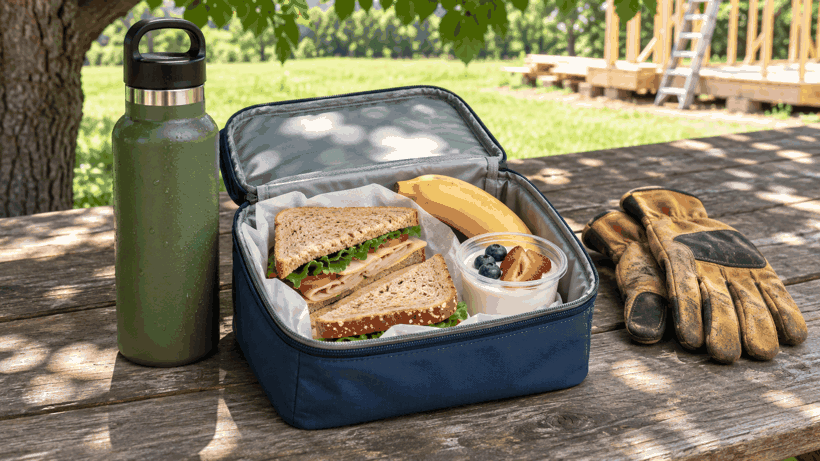
Hydration for outdoor workers starts with access to safe drinking water and time to drink it. Pack a refillable bottle and a meal you can eat during a scheduled break. Before a hot shift, find out where water, shade and first-aid support will be available throughout the day.
Jump to frequently asked questions
Match your drink breaks to the work
For moderate activity in heat for less than two hours, NIOSH suggests roughly a cup of water every 15 to 20 minutes. That example applies to a specific work setting. Heavier work, protective clothing, humidity and longer exposure change the heat burden. Discuss the site plan with your supervisor and use the designated work and rest schedule.
Check how much your bottle holds and where you can refill. An 8-ounce cup is about 240 mL, so a 750 mL bottle holds roughly three cups. The bottle helps you plan a refill point. Easy access to water and a cool rest area matter more than a particular bottle size.
Pack a shift meal you can actually eat
Before work, have a normal meal and some water. Oats and yogurt or eggs with toast and fruit are quick examples. For lunch, pack a bean or chicken wrap, an orange and water. If a long shift makes a single lunch feel rushed, pack two small items you can eat on separate breaks. Put perishable foods in an insulated cooler with ice packs and keep it out of direct sun.
For ordinary shifts, regular meals supply some of the salt lost in sweat. If sweating continues for several hours, an electrolyte drink with a balanced formulation may be useful alongside rest and access to water. If a clinician has given you a fluid or sodium limit or you take medicines that affect fluid balance, ask for advice before working in high heat. Avoid improvising with salt tablets.
Build the plan around the job site
For a crew moving between locations, agree on who brings extra potable water and how workers signal a break. For stationary jobs, place the water supply close enough that a break is realistic. Crews should have a way to report heat symptoms promptly. New or returning workers need a gradual increase in heat exposure, with training and supervision.
Know when to stop
Headache, weakness, nausea or dizziness during a hot shift are reasons to stop, get to a cooler place and report symptoms promptly. Confusion, slurred speech, seizures or collapse can signal heat stroke. Call local emergency services and begin cooling immediately while help is on the way. Follow the site emergency plan and stay with the person. The CDC and NIOSH heat illness guide explains the first-aid steps for each condition.
Use a plan you can hand to the next shift
Before clocking in, identify the person responsible for water and supplies. During the first break, confirm that the refill point is still accessible and that the cooler is shaded. Before the hottest part of the shift, check whether tasks can move to a cooler location or be split into shorter stretches. Include temporary staff and workers who travel alone in the communication plan. OSHA explains how water, rest and shade work together.
For crews without a fridge, choose a meal that stays practical when cold storage is limited. A shelf-stable snack such as fruit, crackers or a sealed nut butter packet can be a backup. For packing ideas, see portable lunches for work on the move.
Read the NIOSH workplace heat and hydration recommendations and see meal prep ideas for workers
Frequently asked questions
Should I wait until I am thirsty to drink?
Use scheduled access to water during hot work. Thirst alone is an unreliable cue for planning breaks.
Do I need a sports drink every shift?
Water and normal meals suit many shifts. A balanced electrolyte drink can be useful when heavy sweating continues for several hours.
Do water-rich foods count?
They contribute fluid and are useful with meals. Keep safe drinking water available during the shift.
Can I catch up by drinking a lot at once?
Spread drinks through the shift. NIOSH advises that hourly fluid intake generally stay below six cups.
What should I pack for a short break?
Try a small sandwich, a banana or a chilled yogurt, plus water. Choose a portion you can comfortably finish.
What if my job requires heavy protective gear?
Discuss the added heat load with your supervisor. The site may need more cooling breaks or shorter work periods.
What if I take a diuretic?
Ask the prescribing clinician about working in heat, fluid intake and warning signs. Use their advice when planning the shift.
Is an energy drink a good choice?
Water is the usual first choice. NIOSH advises avoiding drinks high in caffeine or sugar in hot working conditions.
What if a coworker becomes confused?
Call emergency services, move them to a cooler place if safe, cool them quickly and stay with them.
Who should arrange water and shade?
Employers should provide access to water and cooling breaks. Workers can help by checking where supplies are and reporting problems early.