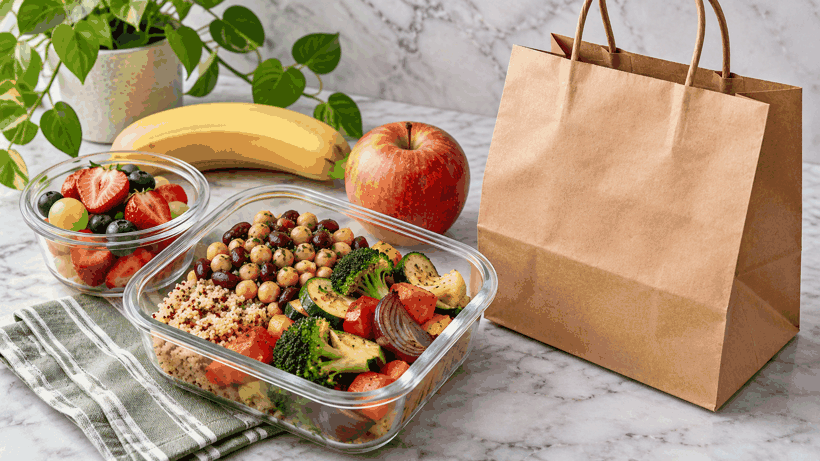
High-fiber packed lunches for delivery drivers should fit the space in your vehicle and the time you have when parked. Build around vegetables, a protein food and a grain, then choose storage for the route.
Pack vegetables that can go straight into lunch
Try chopped peppers and carrots in a chickpea wrap, or cooked green beans and tomatoes in a lentil salad. Put vegetables inside the main dish if you tend to leave separate sides untouched. Choose one whole fruit you can eat during a planned break.
Pick a storage plan before leaving
Use an insulated bag with cold packs for cut produce, cooked grains, dairy or other perishables. If you can’t keep lunch cold, use shelf-stable foods and whole produce that can safely stay at room temperature until you eat. Keep the bag somewhere you can reach when parked.
Make it easy to repeat
Keep two lunch combinations on a note near the door. Rotate vegetables depending on cost and what you tolerate. Increase fiber gradually if your usual lunches have little of it.
USDA packed-lunch food safety guidance · Explore more Diet Expert articles
How to pack a cold lunch for the route
Use an insulated bag and place two frozen cold sources around perishable foods, one above and one below, as shown in USDA packed-lunch guidance. If you can’t keep lunch cold, choose whole fruit, unopened shelf-stable foods and crackers. For routes with longer gaps between stops, see meal prep for long-distance drivers. For more bean-and-grain combinations, see high-fiber lunches for software developers.
Plan lunches around route length and storage
For a short route with a reliable stop, try a chickpea wrap with peppers and carrots plus whole fruit. On a longer route, pack a chilled lentil and vegetable bowl if you can maintain safe storage. Keep a separate backup for delays so you can leave perishables in the insulated bag until you are ready to eat.
Build vegetables into the meal instead of relying on a side you may forget. Rotate a crunchy filling and a cooked filling so the same beans can work in two different lunches. Refill your backup supplies after the route and reset the cold packs before the next shift.
Frequently asked questions
Can I use a frozen water bottle instead of a gel pack?
Yes. USDA lists a frozen water bottle as one cold source. Pair it with a second frozen source, such as a gel pack, and place the two on opposite sides of the perishable food.
What can I keep in the vehicle as a backup lunch?
Pack single-serving, unopened items labeled for room-temperature storage, such as whole-grain crackers and a bean pouch. Add whole fruit before leaving, and follow the package storage instructions, especially in a hot vehicle.
What can I add to a wrap for crunch?
Try shredded carrots or chopped peppers inside the wrap.
How can I keep dressing from leaking?
Use a separate leak-resistant container and add it at your stop.
Can I add frozen cold packs the morning I leave?
Yes. Freeze them ahead of time and place them around perishables.
Can I pack last night’s cooked grain?
Yes, if it was refrigerated promptly and stays properly chilled.
What if the vehicle will be hot all day?
Do not count on a hot cab for storage. Follow product directions and use appropriate cold storage for perishables.
What fruit travels without cutting?
A whole apple, pear or orange is a practical choice.
How can I add fiber without changing my whole lunch?
Add one legume or whole-grain component first.
What if I can only make one planned stop?
Pack a meal you can eat while safely parked and keep a shelf-stable backup.