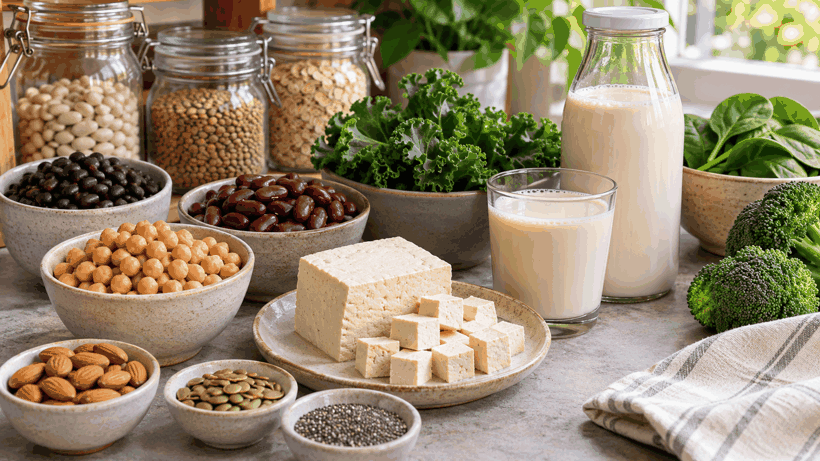
A balanced plant-based diet for young adults starts with the foods you eat most weeks. Choose a reliable protein food, a grain or starchy food and produce. Then check which nutrients need deliberate planning when you change what you buy.
Give B12 a reliable place
Unfortified plant foods are not reliable sources of vitamin B12. Look for a fortified product that lists it and check the serving you use. If your intake from fortified foods is inconsistent, ask a clinician or dietitian about an appropriate supplement. Keep a separate calcium check for plant drinks and tofu.
Plan repeat meals with different roles
For example, have oats and fortified soy drink in the morning, a lentil bowl with peppers at lunch and tofu with rice and vegetables at dinner. Pairing an iron-containing plant food with vitamin C can support nonheme iron absorption. Compare brands on the nutrients you are relying on.
Review your pattern when routines change
Moving, working late or losing access to a kitchen can change what you actually eat. Check several ordinary days and keep two quick backup meals. If you have symptoms or a highly restricted intake, seek individual guidance rather than diagnosing a deficiency from a checklist.
Read the evidence and guidance · Read the related Diet Expert guide
Put it into practice
Keep oats, lentils and a fortified soy beverage on the shopping list so several meals share ingredients. For a closer look at a nutrient that needs a reliable source, read our guide to vitamin B12 for vegans.
Frequently asked questions
What should I plan first?
Choose two repeat meals and a reliable B12 source.
Is all plant milk fortified?
No. Check the label.
Does unfortified nutritional yeast supply reliable B12?
Choose a product that specifically lists B12.
What can I use for protein?
Try beans, lentils, tofu or another suitable food.
How do I check calcium?
Compare the labels at your usual portions.
What can I pair with lentils?
Try peppers or citrus alongside.
What if I eat at a cafeteria?
Look for a protein choice, grain and produce.
Should I track one day?
Check several typical days.
Can I rely on a supplement alone?
Plan overall meals and ask about individual needs.
When should I seek assessment?
If symptoms persist or intake is very restricted.